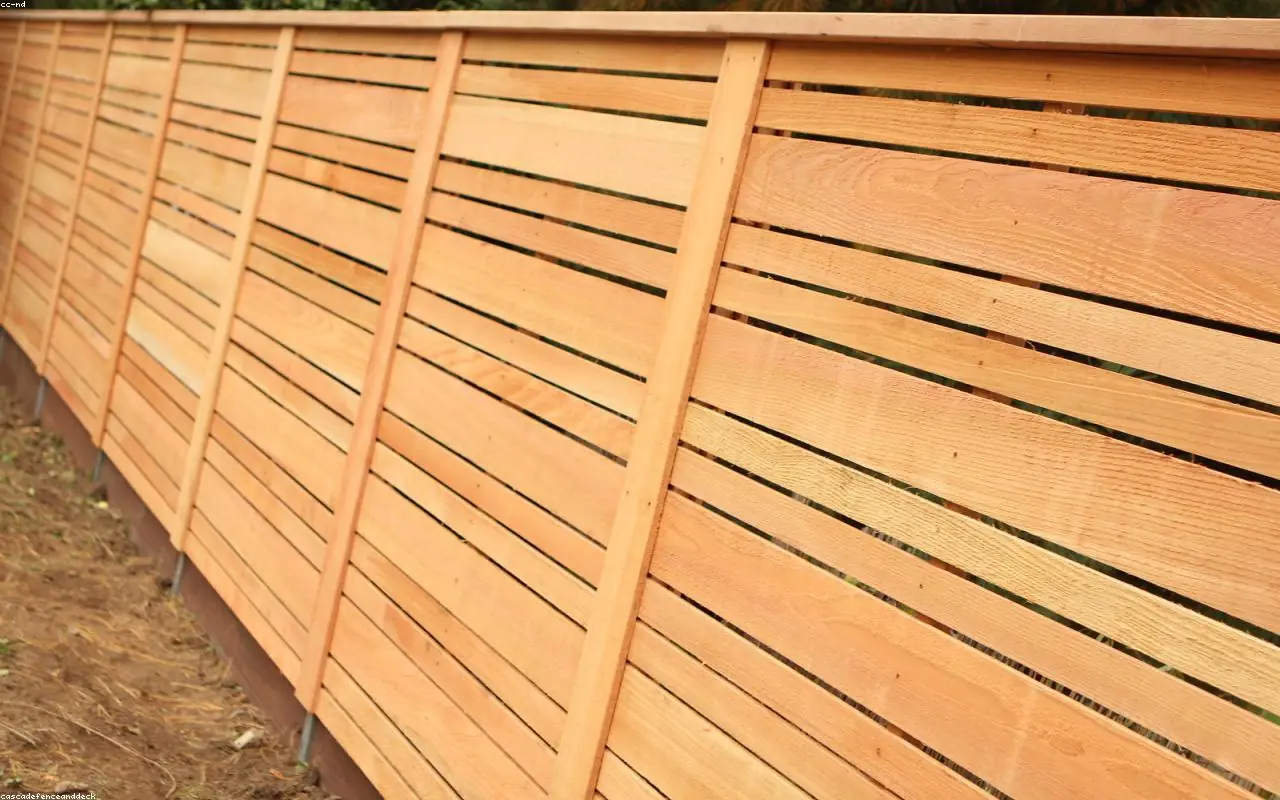
Sleek, modern horizontal slat fencing in kiln-dried western red cedar — a contemporary statement built on steel posts with the structure to stay dead straight in the wet Pacific Northwest.
A horizontal fence flips the boards sideways, and that one change transforms the look. Instead of the familiar vertical-picket fence, horizontal slats read as clean, wide, and architectural — the signature look on modern and contemporary Portland-metro homes, new builds, and statement front yards. If you want a fence that does serious work on curb appeal, this is it. Talk to Beaverton Fence Pro or compare with our other Beaverton fencing services.
The catch is that running boards horizontally puts more demand on the structure and the wood, so a horizontal fence has to be built more carefully than a standard nail-up. Done right, it's a stunning, durable fence; done cheaply, it sags and warps fast. We build them right — the species, the posts, and the framing all matter, and we get all three correct.
The best wood for a horizontal fence is cedar — specifically, cedar that's been dried properly.
Naturally rot- and insect-resistant with a warm, even tone that suits modern design. Our default board for horizontal builds in the PNW.
Drying matters most on a horizontal fence. Kiln-dried boards have given up their moisture, so they resist the warping and cupping that ruin a long sideways run.
We can build horizontal fencing in other woods or composites on request, but properly dried cedar gives the best balance of looks, stability, and PNW durability.
How much gap should sit between horizontal boards? That's the design decision that sets the whole feel of the fence. We build it two main ways:
So yes — a horizontal fence can be fully private when built board-on-board, or it can be an airy design feature when spaced. We'll mock up the gap and show you the difference before we commit. For full seclusion in a vertical format, see our cedar privacy fence; for traditional builds, our wood fence installation page covers the options.
This is where horizontal fencing is won or lost. Our structure is built to stay straight.
Call Beaverton Fence Pro for a free design-led estimate. We answer 24/7 and build statement fencing across Beaverton and Washington County.

Finish your horizontal cedar fence with a clear seal to lock in the natural tone, a tinted stain to deepen it, or leave it to weather to an even silver-gray — all three look great in this format. Horizontal fencing fits best on modern and contemporary homes, bold front-yard statements, and clean-lined backyards where the fence is meant to be seen, not hidden.
A horizontal fence runs roughly double a basic nail-up vertical fence, and there are real reasons for it: it's more labor-intensive, it uses more framing and structure, it leans on steel posts, and it demands precision board-by-board layout to look the part. You're paying for a designer fence built to stay straight, not a quick picket job. Every horizontal fence we build can include a matching fence gate so the entry continues the clean line. We quote cost itemized by length, height, gap style, and structure — no fixed-price guesswork. Serving the west side — check fencing in Cedar Hills.
Running boards sideways is harder on the wood than the standard vertical nail-up, so the species and how it was dried do most of the heavy lifting. Kiln-dried western red cedar is the board we reach for because the kiln has already pulled the moisture out before the wood is installed. Green or air-dried lumber keeps drying on the fence, and as it loses water it twists, cups, and warps — defects you barely notice on a short vertical picket but that telegraph badly across a long horizontal run, where every board sits at eye level and any bow throws off the whole line. Cedar's natural oils also resist rot and insects, which matters in a climate that keeps wood damp for months. Properly dried cedar is what lets a horizontal fence stay flat and straight instead of looking wavy a year in.
A horizontal board can't lean on its neighbors for support the way stacked vertical pickets do, so the framing carries the load — and that's where corners get cut on cheap installs. We build on steel posts because they give a dead-straight, rigid reference that won't flex or rot at the base, and we set them no more than six feet on center, closer than a vertical fence, so the boards have less unsupported span to sag across. Add extra rails and internal framing behind the slats, and each board is supported often enough that it can't bow under its own weight or after a few wet seasons. That added structure is also the honest reason a horizontal fence costs roughly double a basic vertical one: more posts, more steel, more framing, and far more precision in leveling and spacing every board by hand. You're paying for a fence engineered to stay flat, not a quick picket job.
The gap between boards sets the entire character. Run tight board-on-board, with each row overlapping the next, and you get full privacy with deep shadow lines and no see-through slots even as the wood moves seasonally. Leave an even, deliberate gap of an inch or so between slats and you get airflow, filtered light, and a lighter, more open modern look that still screens direct sightlines. For finish, a clear seal locks in the warm cedar tone, a tinted stain deepens it, or you can leave the wood to weather to an even silver-gray — all three suit the format, and the choice is purely aesthetic since durability comes from the cedar and the structure. Horizontal fencing looks most at home on modern and contemporary houses, new builds, and statement front yards where the fence is meant to be seen rather than hidden behind a hedge. It's a design feature first, a boundary second.
Straight answers — no clicking around.
Talk design, gap spacing, and structure with a licensed Beaverton fence builder who builds horizontal right. Open 24/7.
(855) 598-3288